On April 3, Tesla (TSLA.US) released its production and delivery figures for the first quarter of 2026. Affected by core metrics falling short of market expectations, the company’s stock came under significant pressure, briefly dipping below the $360 mark during intraday trading, reaching a low of around $359, and ultimately closing down 5.42% at $360.59, marking one of the largest single-day declines of the year, with market sentiment noticeably weakening.
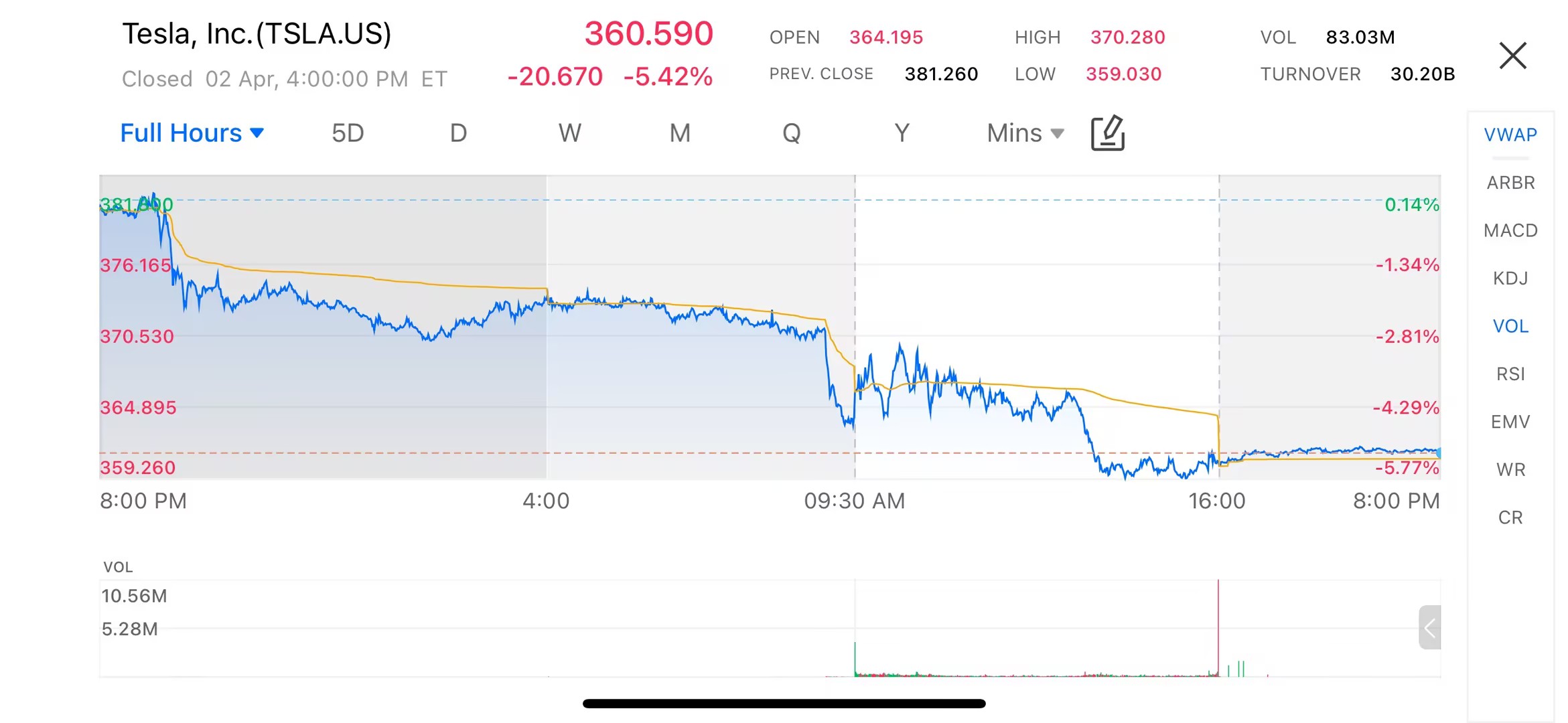
(Image source: uSMART HK app)
Deliveries and Production Both “Below Expectations”
Looking at key operational data, the company delivered approximately 358,000 vehicles in Q1, a sequential decline of about 13% but a year-on-year increase of roughly 6%, still below the market consensus of around 370,000 units. Meanwhile, total production reached approximately 408,000 vehicles, indicating a certain mismatch between supply and demand. In terms of model structure, the Model 3 and Model Y remain the dominant contributors, together accounting for over 95% of deliveries. In contrast, demand for high-end models continues to weaken, with Model S and Model X lagging, putting pressure on the overall revenue mix. Notably, the company has already adjusted some high-end production lines, reallocating resources toward new business areas, which has partly accelerated the loss of high-end market share.
Multiple Factors Suppress Demand
The pressure on deliveries this quarter is not due to a single factor but the result of multiple combined pressures. First, global competition in the EV market is intensifying, with both traditional automakers and new entrants ramping up investments, leading to simultaneous price and product competitiveness pressures. Second, changes in U.S. EV policies, particularly the anticipated withdrawal of federal tax incentives, have disturbed short-term demand. Additionally, brand-related controversies have affected demand in certain overseas markets. In this context, Tesla’s growth momentum has temporarily slowed, prompting the market to reassess its demand resilience.
Energy Business Also Weakens, Growth Engines Diverge
Beyond the automotive core, Tesla’s energy business has also failed to provide meaningful support. In Q1, the deployment of energy storage systems reached approximately 8.8 GWh, a sharp sequential decline of around 38% and below the same period last year. As a “second growth curve” long expected by investors, the short-term volatility in energy storage raises concerns about its stability. With automotive operations under pressure, this segment has not provided an effective hedge.
Earnings Preview: Gross Margin and Supply Chain Key Focus Areas
Tesla is scheduled to release its full quarterly report on April 22. Automotive gross margins, inventory levels, and supply chain conditions are expected to be the market’s key points of focus. Although Elon Musk continues to promote cutting-edge projects such as autonomous taxis, heavy-duty trucks, and humanoid robots, and consistently communicates a long-term growth narrative, these businesses have yet to generate substantial revenue in the short term.Overall, against the backdrop of slowing core automotive growth and nascent innovation initiatives, Tesla is in a critical period of performance and expectation rebalancing. The market will closely watch its path to restoring profitability and the progress of new business monetization.
How to Buy Tesla via on uSMART
After logging into the uSMART HK app, click the “Search” button in the top-right corner of the page, enter the ticker code (TSLA.US), and navigate to the details page to view transaction details and historical trends. Click the “Trade” button in the bottom-right corner, select the trade type, and submit your order after filling in the transaction conditions.
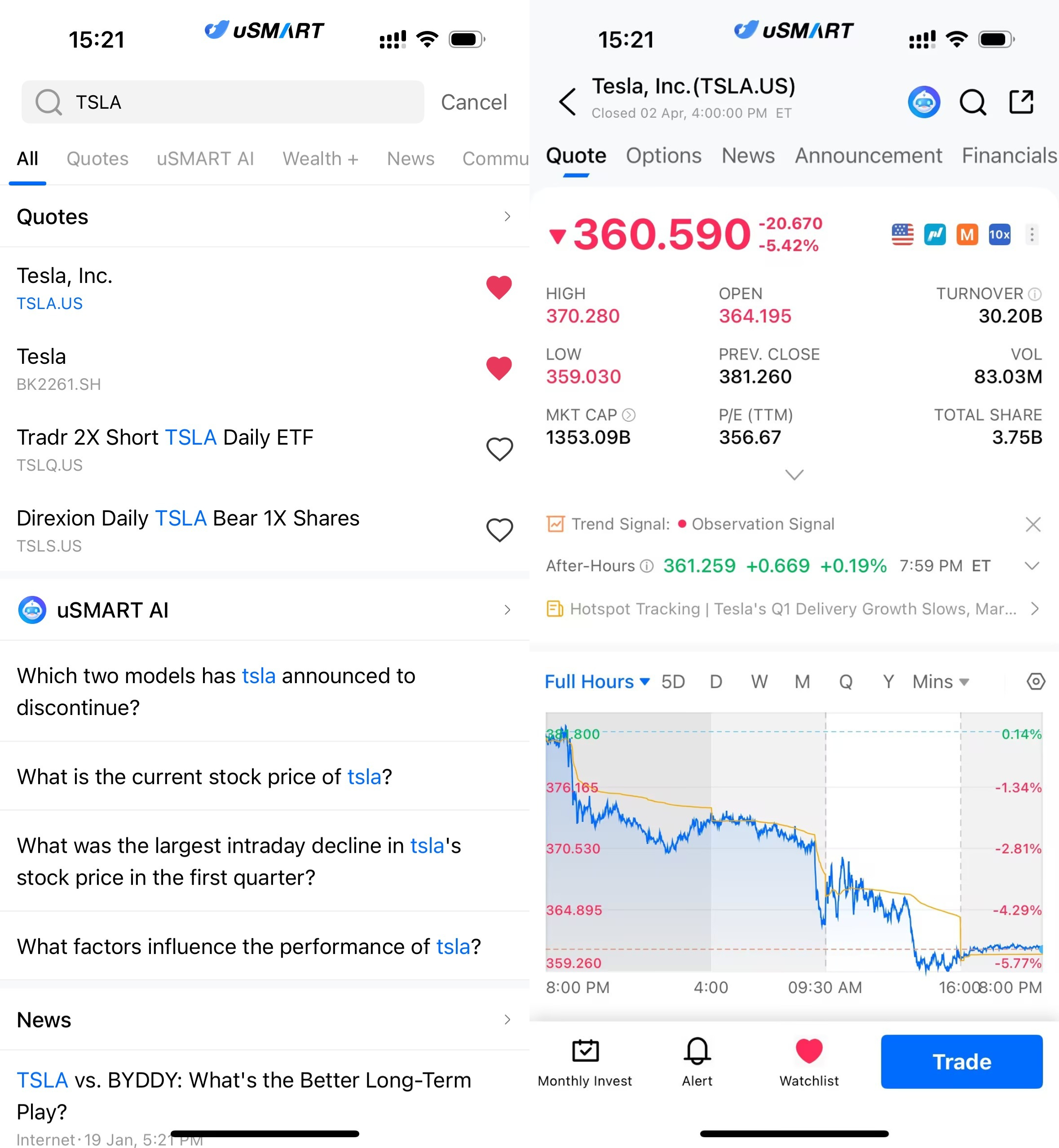
(Image Source: uSMART HK app)


More Content