


Initial Public Offering (IPO) Transaction fee can Be as low as $0*
Buy in one click,Financing assistance
Download Now*T&C apply
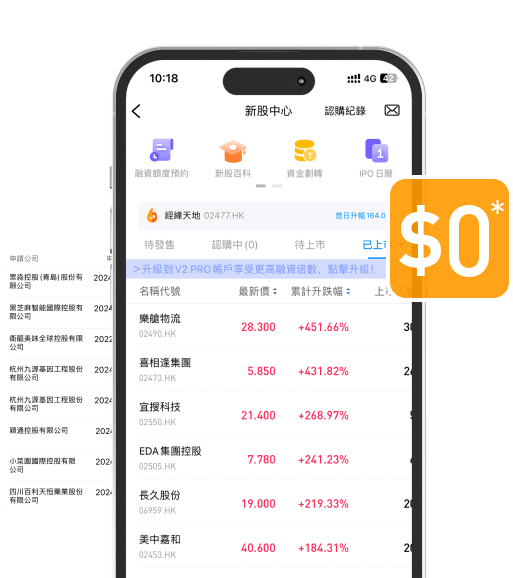


What is Initial Public Offering (IPO)
IPO, Initial Public Offerings, is a company's first public offering of shares for public subscription in order to raise funds for listing. An initial public offering provides companies with an opportunity to raise capital by issuing shares in a major market.
uSMART App has a special IPO center, and customers can instantly subscribe for buy new shares for public sale through the App.

Why choose uSMART Securities to subscribe for buy new shares?

Add space between low fees
The transaction fee for new share subscription can be as low as $0
*T&C apply

Greater purchasing power
uSMART supports financing subscriptions to increase purchasing power

Enrich IPO targets
At the same time, it supports the subscription of new shares in Hong Kong stocks and the subscription of new stocks in U.S. stocks, and there are many products to choose from.
Support grey market trading
uSMART supports grey market trading with commissions as low as 0.05%, and the minimum commission fee for each order is HK$12.
How to participate in new stock subscription (IPO)
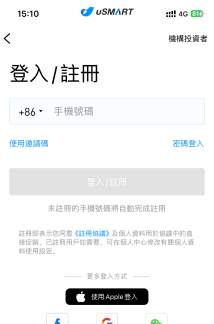
1
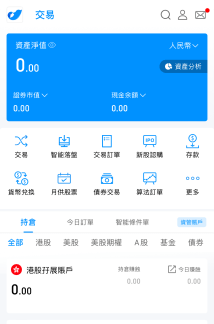
2
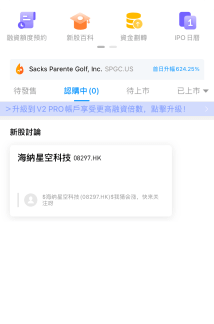
3
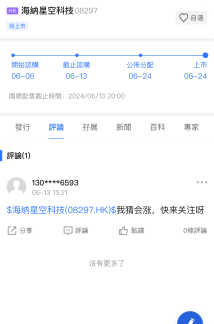
4
Open uSMART app
Trading>Initial Public Offering
Hong Kong Stocks/US Stocks
Select the new shares to be subscribed and click Subscription
FAQs
What are the benefits for investors to participate in an IPO?
In order to list smoothly, most companies are willing to issue shares at a discount, and there are arbitrage opportunities when subscribing for new shares.Taking the Hong Kong stock market as an example, new stocks listed in 2020 have an average first-day increase of 18.2%; new stocks listed in the first ten months of 2021 have an average first-day increase of 15.9%.
Announce allotment /refund rules
Generally, the allotment results will be announced on the trading day before listing, and the allocated shares will be credited to your account on the same day. The unsuccessful portion or the difference between the subscription amount and the final issuance price will be returned to your securities account on the allotment day. Please pay attention to the account fund details and statement.
*If there are special circumstances, the exchange announcement shall prevail. Please pay attention to the system notification.
What are the key points of Hong Kong IPOs Subscription?
●Trading hours: The trading hours of the Hong Kong stock market are clearly defined, including the morning bidding trading period, the continuous trading period, and the afternoon continuous trading period. Investors need to understand and abide by these trading hours to ensure the smooth progress of IPOs Subscription.
●Subscription fee: During the subscription process of new Hong Kong stocks, investors need to pay a certain subscription fee. These fees usually include new share subscription fees, financing interest fees, and stock buying and selling fees. The subscription fee will be deducted when stock is allocated. Even if the lottery is not won, as long as the subscription is initiated, a certain handling fee will be charged. In addition, the Hong Kong Stock Exchange will also charge transaction levies and transaction fees.
●Trading rules: The Hong Kong stock market implements a T+0 trading system, that is, purchased stocks can be sold on the same day. However, investors need to note that although they can buy and sell on the same day, there is a limit on the number of transactions, that is, there is a limit of five transactions within the day.
●Frozen Fund : During the IPOs subscription, investors need to freeze the corresponding funds in advance. This means that when subscribing for new shares, you must ensure that there are sufficient funds in the account for freezing. The amount of frozen funds depends on the number and price of new shares subscribed.
●Allotment rules: The allotment rules for Hong Kong stocks are relatively complex and are usually divided into first hand, group A, group B, etc. Different subscription lot sizes correspond to different allotment rates. Generally, first-hand subscription is the core technique for retail investors to subscribe for new shares, because the Hong Kong Stock Exchange will give retail investors a higher winning rate.
*Please note that the above are only part of the rules for IPOs subscriptions for Hong Kong stocks. The actual IPOs subscription process may involve more details and regulations. Therefore, before subscribing IPOs, investors should understand the relevant rules in detail and carefully assess their risk tolerance and investment objectives.
What are the key points of the subscription rules for new U.S. stocks:
●Brokerage cooperation and distribution: Investors need to participate through a brokerage that has the subscription for U.S. IPOs. The distribution of new shares mainly relies on underwriters or brokers with distribution qualifications.
●Subscription principle: Follow the principle that the more you subscribe, the higher the probability of winning. The larger the subscription amount, the higher the probability of allotment.
●Funding requirements: New stock subscriptions usually have minimum quantity requirements (such as 100 shares or 50 shares). Investors need to ensure that their accounts have sufficient funds, but there is usually no need to freeze funds during the subscription period.
●Listing and allotment lottery time: New shares will be listed for trading at a specific time, and the allotment lottery results will be announced after the listing date. Investors need to pay attention to brokerage notifications or trading platform information.
●Transaction costs: Subscription U.S. IPOs involves IPOs transaction fees, etc. Investors need to understand and calculate relevant fees.
●Risk assessment: Although subscription of U.S. IPOs may bring high returns, there are also risks. Investors should evaluate their own risk tolerance and make prudent decisions.
*Please note that investors should further understand the detailed rules and choose appropriate brokers and strategies in actual operations. At the same time, continue to pay attention to market dynamics in order to flexibly adjust investment strategies.
CS Hotline: +852 3018 4526
Trading days: 24 hours | Non-trading days: 9:00-18:00
Email: cs@usmart.hk
WhatsApp: +852 5989 2641


